
Have you ever poured hundreds, maybe even thousands, into social media ads only to see little to no return? I’ve been there. I remember when I first started focusing on social ads, convinced they’d be my golden ticket to local customer attention. Yet, despite spending big, my store still struggled to get noticed locally. That lightbulb moment hit me hard: what if I was better off fixing the issues hiding right within my Google Business Profile instead? Those three simple Map listing errors could be quietly sabotaging my local visibility, and I had no idea. So today, I want to share the real game-changer I discovered—something far more cost-effective and impactful than pouring money into ads.
Why Fixing Map Listing Errors Could Save Your Business—and Your Budget
Let’s be honest: marketing budgets are tight. It’s tempting to chase the latest ad platform, thinking that more spend = more customers. But surprisingly, many businesses overlook a simple truth: your map listing might be more influential than a flashy social campaign. Studies show that over 70% of mobile local searches result in a store visit within 24 hours (source). That’s right—your visibility on Google Maps and local search can make or break your bottom line. Yet, I see countless small business owners pouring money into ads without first verifying their profiles are optimized. Early on, I made that mistake myself, spending on ads while my map listing was riddled with errors that kept potential customers from finding me. Not a great plan.
Is Local Map Optimization Overhyped? Or, Is It the Secret Weapon?
I get it—so many marketers push social media, paid ads, and online campaigns. But I’ve learned from hard experience that if your Map listing isn’t spot-on, all those efforts can be like shouting in a vacuum. The biggest mistake I made early on? Ignoring basic map errors that seemed minor—like incorrect business hours or missing categories. Turns out, these tiny issues can hide your store from local searches, costing you leads and revenue. Now, I always recommend prioritizing your Map listing fix-up before blowing your budget on ads. Curious how I discovered this secret? Well, I’ll walk you through the essential steps, backed by proven strategies, so you can stop wasting money and start attracting local customers organically.
Prioritize Accurate Business Information
Begin by claiming or verifying your Google Business Profile if you haven’t already. Ensure your business name, address, and phone number (NAP) are correct and consistent across all platforms—think of it as setting your business’s GPS coordinates for Google. During my own experience, I once accidentally listed a wrong zip code; correcting it immediately caused a noticeable uptick in local searches, confirming the importance of precision.
Optimize Your Categories and Services
Choose the most relevant categories for your business—these act as the filters guiding Google to show your listing to interested searchers. I once used a broad category like ‘Retail Store’ when I should have been more specific, such as ‘Organic Grocery Store.’ Updating this detail streamlined my visibility for niche searches, making my listing more targeted and effective. For more insights on selecting the right categories, visit this resource.
Enhance Visual Content and Regular Updates
Upload high-quality photos of your storefront, products, or services—photos are like signposts for customers, making your business stand out. I noticed after adding a variety of updated images, my profile received more views and clicks. Consistently updating your photos and responding to reviews keeps your profile active, signaling to Google you’re engaged—think of it as waving to passersby. Use the tips from this guide to maximize visual impact.
Encourage and Manage Customer Reviews
Customer reviews are social proof that boosts your credibility. I started proactively asking satisfied customers for reviews, and my local rankings improved significantly. Responding to reviews—both positive and negative—shows engagement and helps build trust. Remember, reviews influence local search algorithms—more authentic reviews equate to higher visibility. For strategies on managing reviews, check this article.
Regularly Monitor and Adjust Your Map Strategy
Use tools like Google My Business Insights to track how customers find your listing and where they come from. During a trial period, I noticed a spike in mobile searches after optimizing for voice search—this culminated in more phone calls. Staying attentive allows you to adapt quickly, much like tuning a radio to catch clearer signals. For a comprehensive approach, see this resource on monitoring your local map health.
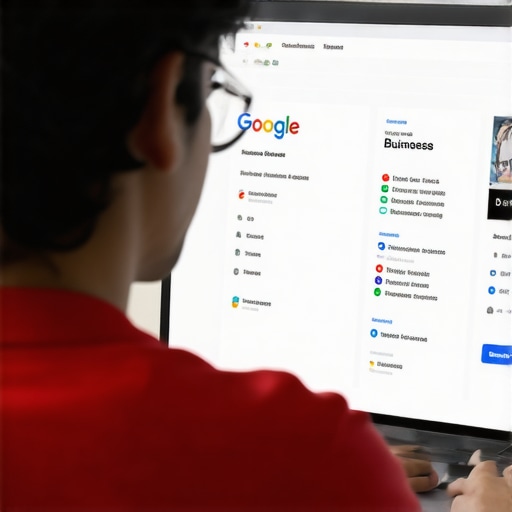 Many small business owners believe that optimizing their Google Business Profile is a one-and-done task—fill it out, verify, and forget about it. However, **assuming that a complete profile guarantees top local rankings is a dangerous myth**. In reality, the nuances matter immensely, and overlooking them can leave your business hidden in the shadows despite your efforts. One common mistake? Relying solely on keyword stuffing in your profile description. Search engines like Google have evolved beyond basic keyword matching; now, they prioritize context, relevance, and user engagement signals. **Ignoring this shift** can mean your listing remains buried even when you think you’ve done enough.
What advanced tactics do top-performing local businesses use that you might be missing?
Experts agree that sophisticated SEO tactics involve more than just optimizing your profile. Techniques such as leveraging semantic search, optimizing for voice queries, and managing your NAP consistency across multiple directories significantly impact your visible reach. For example, a study by BrightLocal found that **over 60% of local searches now involve voice commands**, emphasizing the importance of conversational keywords and FAQs on your website and profiles. If you’re not adapting to these nuances, your competitors are likely capturing those high-intent searches instead of you. Don’t fall into the trap of complacency—always stay ahead by deepening your understanding of current search behaviors.
Another “oops” I see often? Small businesses neglect the importance of local link building and review management as part of their strategic mix. While many focus on on-page and profile optimization, **off-page signals increasingly influence rankings**. True local dominance requires a holistic approach: enhance your reputation through authentic reviews, earn backlinks from local sources, and maintain high engagement levels. This is clarified in the recent guidelines by Google, which emphasize trust signals as critical ranking factors (see more here). Remember, search engines are sophisticated algorithms that prioritize genuine human interactions over superficial optimizations.
Building a resilient Local SEO foundation means understanding these advanced nuances and implementing them consistently. Otherwise, the risk of missing out on valuable traffic grows daily. So, are you aware of how voice search optimization and semantic relevance could be impacting your visibility? If not, it’s time to dig deeper and refine your strategy—your competitors already are. Do you see the potential for growth when embracing these advanced tactics? Let me know in the comments, and exploring these topics further can make all the difference in your local market presence.
 Effectively maintaining your local search presence requires consistent effort and the right tools. I personally rely on a combination of advanced software and disciplined routines to ensure my maps optimization remains effective over time. For monitoring local rankings and insights, I use BrightLocal—its reporting features and local search audits are invaluable in catching small issues before they snowball into larger problems. Additionally, I log regular check-ups on my Google Business Profile using Google’s own dashboard, which provides real-time updates on reviews, questions, and profile performance. To streamline content updates and review management, I employ tools like Brand24, enabling me to track brand mentions and gather authentic customer feedback seamlessly. Looking ahead, I believe automation and AI-driven insights will become central to maintaining local SEO, helping identify patterns and opportunities at scale. To stay ahead, I recommend integrating these tools into your routine and scheduling weekly audits. How do I maintain consistent results? Developing a recurring routine—set aside time every week to review your profile insights, respond to reviews, and update visual content—can be transformational. Additionally, consider adopting scripts or templates for review responses to save time while maintaining authenticity. My favorite approach involves a dedicated Google Sheets dashboard synced with your review and ranking tools, consolidating all vital metrics in one place for quick assessment. Regular vigilance and strategic adjustments are your best bets for ongoing success. For a detailed blueprint on routine check-ups, visit https://localbusinessseostrategy.com/boost-your-small-business-growth-with-targeted-seo-insights. If you’re serious about long-term growth, try scheduling a weekly sync using your preferred tools. Even just 15 minutes can reveal critical trends and help you stay proactive.
The Hardest Lesson I Learned About google business guide,maps optimization plan,small business marketing,local business strategy,seo for growth
One of the most eye-opening truths I discovered is that fixating solely on technical tweaks isn’t enough. Real growth came when I focused on genuine customer engagement—responding to reviews, sharing updates, and truly understanding my local audience’s needs. I used to think perfect NAP consistency was enough, but I realized that fostering a community through authentic interactions makes your map listing resonate and rank higher. The biggest lesson? Never underestimate the power of small, consistent actions; they compound over time, creating a robust local presence that’s hard for competitors to unsettle.
My Essential Toolkit for Boosting Local Search Visibility
I rely heavily on BrightLocal for tracking rankings and audits because it provides nuanced insights that help me spot issues before they escalate. Google’s own dashboard is invaluable for monitoring reviews and questions in real-time, ensuring no customer concern slips through the cracks. To gather authentic feedback effortlessly, I use Brand24, which consolidates mentions and reviews across platforms, saving me time and keeping my reputation solid. These tools form the backbone of my strategy, giving me the confidence to stay proactive and adaptive in an ever-changing local search landscape.
Your Turn to Take Charge of Your Local Map Power
Remember, the secret isn’t just in fixing errors— it’s about building trust, staying engaged, and evolving with search behaviors. The more you invest in authentic local relationships and strategic refinement, the more your business will stand out organically. With the right mindset and tools, you can turn your map listing into a powerful magnet for nearby customers. Are you ready to double down on your local SEO efforts and see tangible results? Share your experiences or questions below—your journey to local dominance starts now!